

You’re scrolling through your phone at 10 PM, half-reading articles, half-checking notifications. Tomorrow you have an early morning, and you know you should put the screen down, but—does the blue light from your phone actually matter? You’ve heard it disrupts sleep, but you’ve also heard it’s overblown.
The short answer
Blue light does suppress melatonin in controlled lab settings, but in real-world conditions the impact on your sleep depends more on screen brightness, how close you hold the device, what time of evening you’re using it, and what you’re doing on it—not just wavelength alone. And critically: daytime blue light exposure is essential for healthy sleep, which means the story isn’t “avoid blue light” but “get the timing right.”
The blue light mechanism is real
Blue light sleep research centers on a specific biological pathway. Light around 460 nanometers (deep blue) activates specialized cells in your retina called intrinsically photosensitive retinal ganglion cells (ipRGCs). These cells signal your brain’s circadian clock, suppressing melatonin—the hormone that helps you feel sleepy.
This mechanism has been demonstrated repeatedly in laboratory conditions. Research published on PubMed shows that exposure to blue-enriched light before bed delays melatonin onset and reduces total melatonin duration compared to dim light. The effect is measurable and consistent in controlled settings.
But lab conditions—subjects in darkened rooms, staring at calibrated light sources for hours—don’t match how most of us use screens at home.
The gap between lab results and your bedroom

The blue light sleep relationship gets murkier when you move from the lab to everyday life. Population studies consistently show that screen time before bed is associated with worse sleep, but they can’t prove that blue light itself is the cause.
Research tracking adolescents who used screens before bed found poorer sleep quality, but multiple confounding factors emerged: anxiety from social media, stimulating content, and irregular sleep schedules. Blue light couldn’t be isolated as the primary culprit.
Another layer: engagement matters. If you’re checking work emails or scrolling through anxiety-inducing news, your brain’s arousal state suppresses melatonin independent of light wavelength. Psychological stimulation delays sleep onset even in pitch darkness.
What actually matters more than wavelength
When researchers have tried to quantify blue light’s real-world impact, several factors emerge as more important than the color of the light.
Brightness and distance. Your phone at arm’s length (about 30 cm) and typical brightness produces roughly 10 to 50 lux of illumination at your eyes. Overhead room lighting, by contrast, often delivers 200 to 500 lux. Research in circadian biology has found that melatonin suppression depends heavily on total illuminance—meaning a bright lamp across the room can suppress melatonin more than a dim phone held close.
Holding your phone farther away or dimming the screen to below 30% brightness reduces the light dose substantially. This is a bigger lever than filtering out blue wavelengths.
Timing matters more than you think. Your sensitivity to light changes throughout the evening. The CDC notes that the 2 to 3 hours before your usual bedtime is the most vulnerable window—that’s when melatonin is beginning to rise, and light exposure can delay that onset.
Here’s the actionable part: if your bedtime is 11 PM, dim screens by 9 PM; if it’s midnight, by 10 PM. Research has found that even moderate room light during this pre-sleep window suppresses melatonin and shortens its duration. Later in the evening, once melatonin is well-established, sensitivity decreases.
Screen use at 8 PM is less disruptive than screen use at 10 PM if you typically go to bed at 11 PM. Work backward from your target sleep time, not from an arbitrary hour.
What you’re doing on the screen. This is the confound that blue light headlines miss. Review research analyzing screen use in adolescents found that content type and engagement level predicted sleep latency better than device type. Watching a calm show is different from arguing in a comment thread; one might delay sleep through arousal, the other through light exposure, and both might combine.
Blue light filters and glasses: the evidence is weaker than the marketing
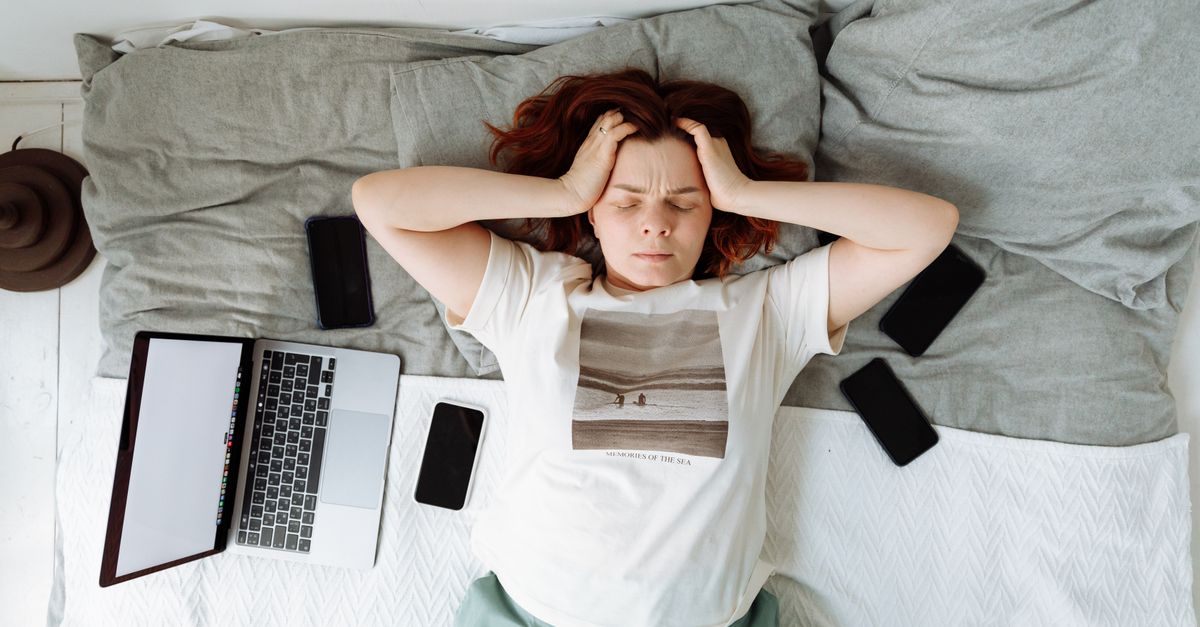
Blue light-blocking glasses are marketed heavily as a sleep solution, but the real-world evidence is mixed to weak. Randomized trials testing these glasses have produced inconsistent results. Meta-analyses reviewing the evidence conclude that blue light-blocking glasses show “limited and heterogeneous” effects on sleep quality. Some studies found small benefits; others found none.
The filters don’t block all 460 nm light, and they don’t address brightness, distance, or engagement—the other factors that matter more. If you use blue light glasses and feel they help, that’s fine, but don’t rely on them alone. Pair them with screen dimming, increased distance, and earlier cutoff times.
System-level night modes (Night Shift on iOS, Night Light on Windows) reduce blue wavelengths, but they also don’t eliminate the light dose. Evidence for real-world sleep benefit is weak, though the cost and risk are minimal. Again, these are supplements to better habits, not replacements.
The critical piece most blue light articles miss: you need blue light during the day
Here’s the reframe: blue light isn’t inherently bad for sleep. Blue light at the wrong time disrupts sleep, but blue light at the right time is essential for healthy circadian rhythms.
Morning and daytime exposure to blue light—especially from sunlight—reinforces your circadian clock, which actually improves nighttime sleep quality. The American Academy of Sleep Medicine emphasizes that daytime light exposure is one of the most powerful regulators of your sleep-wake cycle.
If you avoid blue light all day (working in dim indoor lighting, wearing blue-blocking glasses during the day), you may actually weaken your circadian rhythm and make evening light more disruptive. Your body needs the daytime signal to know when it’s day, which helps it recognize when it’s night.
Practical takeaway: get bright light exposure—ideally natural sunlight—in the first few hours after waking. This advances your circadian phase and builds a stronger sleep drive for the evening. Morning sunlight and more on how exercise recovery and sleep quality work together build a stronger sleep foundation than any nighttime light avoidance strategy.
The narrative should shift from “blue light is bad” to “blue light timing matters.” Get it in the morning, minimize it in the evening.
Individual variation is huge
Not everyone responds to blue light the same way. Research estimates that roughly 80% of people show measurable melatonin suppression from evening blue light, but about 20% show minimal response. Age plays a role—adolescents and young adults are generally more sensitive than older adults—and genetic variation in circadian photoreceptors creates a wide range of responses.
This means you can’t extrapolate your friend’s experience to your own. If you use your phone for an hour before bed and fall asleep easily, you may be in the less-sensitive group. If you notice a clear delay in sleep onset on screen-heavy nights, you’re likely more sensitive.
What it means for you
If you’re concerned about screen time before bed, the evidence suggests a few concrete steps that address the full picture, not just blue light.
Get bright light in the morning. This is the most overlooked intervention. Morning sunlight (or a bright light box if sunlight isn’t available) sets your circadian clock and makes you less vulnerable to evening light. According to the Mayo Clinic, daytime light exposure is a foundational sleep hygiene practice.
Stop using screens 30 to 60 minutes before bed. This covers both the light exposure and the psychological stimulation. Screen use in the hour before sleep is associated with increased sleep latency, though the mechanism remains uncertain. Eliminating screens during this window removes both plausible causes.
If you must use screens late, dim them and increase distance. Set brightness below 30% or view from more than 50 cm away. This reduces the total light dose to levels that most people’s melatonin systems can tolerate—a low-effort adjustment with clearer evidence than wavelength filtering.
Calculate your personal cutoff time. Work backward from your target bedtime. If you go to bed at 11 PM, start dimming screens by 9 PM. If it’s midnight, by 10 PM. The 2- to 3-hour pre-sleep window is when your melatonin is most vulnerable.
Track your own response. If you consistently struggle with sleep onset after late-night screen use, you’re likely in the more-sensitive group. If you don’t notice a pattern, blue light may not be your primary sleep disruptor—look to How Much Sleep Do You Actually Need? The Science Behind Sleep Requirements, sleep schedule consistency, or other factors like does caffeine timing affect sleep quality.
FAQ
Does blue light actually affect sleep or is that a myth?
The mechanism is real—blue light suppresses melatonin in lab conditions. But the magnitude of the effect in everyday life is smaller than headlines suggest, and other factors like screen engagement, brightness, and timing often matter more. Daytime blue light exposure is also essential for circadian health.
Do blue light glasses actually work for sleep?
The evidence is weak and inconsistent. Meta-analyses show limited and heterogeneous effects. Some people report benefits, but controlled trials don’t consistently support them. The glasses don’t address brightness, distance, or engagement, which matter more than wavelength alone.
What time should I stop using screens before bed?
Work backward from your bedtime. If you go to bed at 11 PM, dim or stop screens by 9 PM. If midnight, by 10 PM. The 2- to 3-hour window before sleep is when melatonin is most vulnerable to light suppression.
How far away should I hold my phone?
Distance combined with dimming matters more than wavelength alone. Holding your phone more than 50 cm away and setting brightness below 30% reduces the light dose to levels that most people tolerate well.
Should I avoid blue light during the day too?
No. Daytime blue light—especially from sunlight—is essential for circadian alignment and actually improves nighttime sleep. Get bright light in the morning to reinforce your sleep-wake cycle.
If you struggle with falling asleep, screens may be one piece of the puzzle—but they’re rarely the only one. See How to Fall Asleep Faster: 6 Science-Backed Techniques That Work for evidence-based strategies that go beyond blue light.
This article is for general information only and not a substitute for professional medical advice. If you have persistent sleep problems, consult a healthcare provider or sleep specialist to rule out underlying sleep disorders.